
By Intentional Spaces Psychotherapy
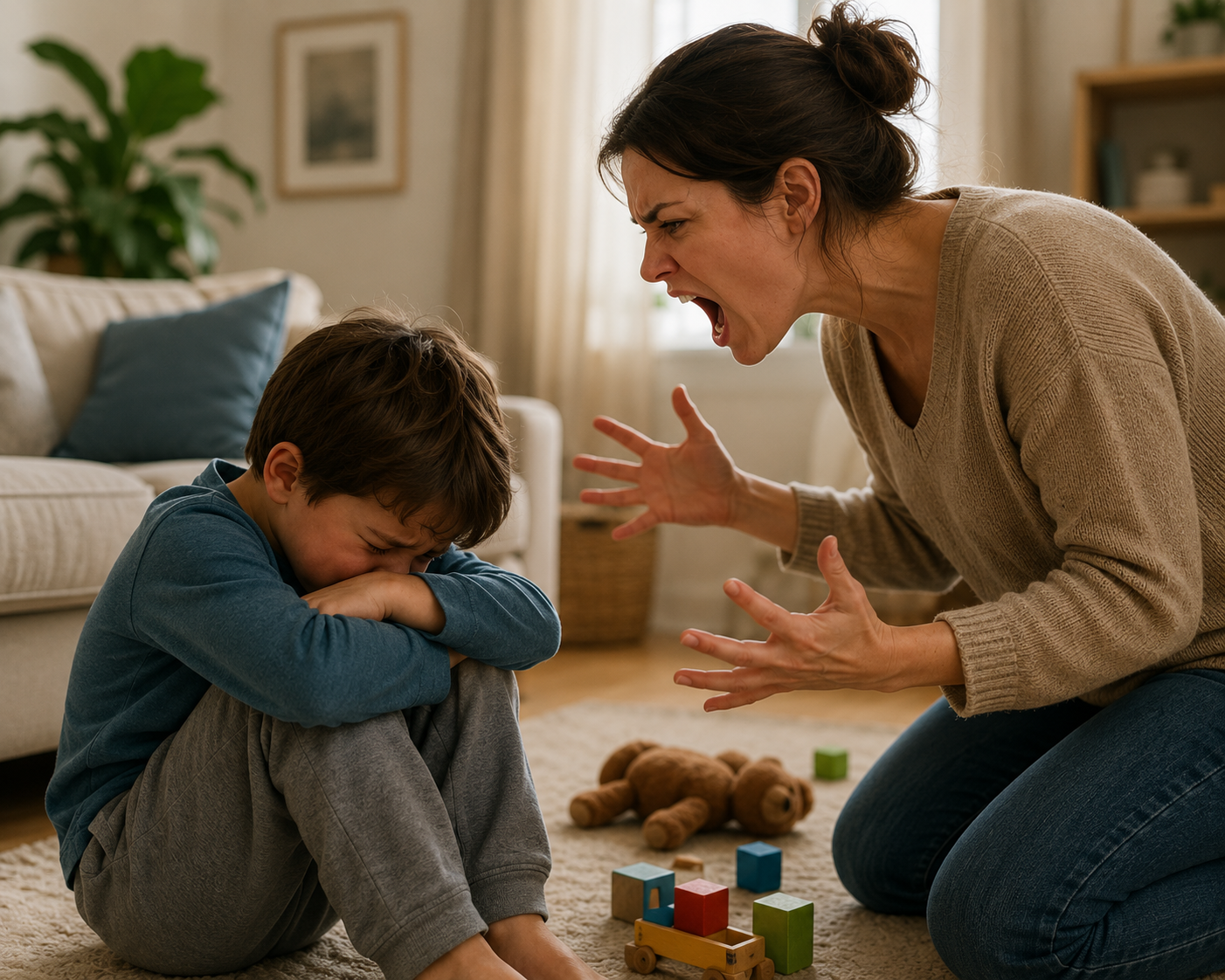
Parenting can bring enormous love, joy, and connection, but it can also bring frustration, exhaustion, and moments when patience feels almost impossible. Children may ignore instructions, argue about boundaries, have emotional outbursts, or repeat behaviors parents have addressed many times before. When a parent is already overwhelmed by work, household responsibilities, financial concerns, lack of sleep, or other stressors, raising their voice can happen quickly.
Occasionally losing your temper does not define your entire relationship with your child. Parents are human, and no one communicates perfectly during every difficult moment. However, when yelling becomes a frequent way of getting a child’s attention, expressing frustration, or enforcing rules, it can gradually influence how children experience communication and emotional safety within the relationship.
Understanding how constant yelling can affect your relationship with your child is not about creating more parenting guilt. It is about becoming aware of patterns and recognizing opportunities for change. A child may become quieter when conflict begins, start hiding mistakes because they fear a parent’s reaction, become increasingly argumentative, or stop sharing certain parts of their life. Parents may also feel guilty after yelling while struggling to understand why the same pattern keeps happening.
Why Parents Yell and How It Can Affect Emotional Connection
Most parents do not intend to communicate through yelling. Often, yelling happens after frustration has been building for hours, days, or even longer. A parent may have repeated the same instruction several times, managed a difficult workday, handled household responsibilities, and reached the point where one additional problem feels overwhelming.
Sometimes yelling is also connected to how someone was parented themselves. If shouting, strict obedience, or intimidating communication was common during childhood, those responses may emerge automatically during stressful parenting moments. You may even hear yourself saying phrases your own parents once used.
Understanding where these reactions come from does not mean excusing behavior that may be hurtful. Instead, awareness can help parents recognize their triggers and develop different responses.
Frequent yelling can gradually change the emotional atmosphere between a parent and child. Instead of focusing on what the parent is trying to teach, a child may become focused on the parent’s anger.
When this happens regularly, children may become more cautious about what they share. They might avoid admitting mistakes, hide problems, or wait until situations become serious before asking for help because they are worried about how the conversation will go.
Emotional connection grows when children know that difficult conversations can happen without threatening the relationship. Boundaries and consequences can still exist, but children benefit from knowing that mistakes can be discussed rather than simply feared.
How Constant Yelling Can Change Your Child's Behavior
Children respond differently to repeated yelling. Some become louder and more argumentative. Others become extremely quiet. Some try to avoid conflict altogether, while others begin hiding information that they believe could lead to another confrontation.
You may notice:
- Yelling back: Children may begin copying the communication style they regularly experience.
- Shutting down: Some children become silent or emotionally distant when conversations become intense.
- Hiding mistakes: Fear of a parent’s reaction may make honesty feel risky.
- Becoming overly compliant: Some children focus heavily on avoiding disappointment or conflict.
A child who yells back is not necessarily demonstrating that yelling “doesn’t bother them.” They may simply be learning that raising your voice is how people express frustration or gain control during disagreements.
On the other hand, a child who becomes extremely quiet is not necessarily unaffected. Silence can sometimes represent an attempt to prevent the situation from becoming more intense.
This is why parents benefit from looking beyond immediate behavior. The goal is not simply to create a child who stops arguing. It is to help children develop emotional regulation, communication skills, accountability, and confidence in handling conflict.
Children learn many of these skills through observation. When adults demonstrate that anger can be expressed without intimidation, children receive an important example of how difficult emotions can be handled.
Discipline Doesn't Have to Mean Intimidation
Reducing yelling does not mean removing discipline or allowing children to ignore rules. Children need boundaries, structure, expectations, and reasonable consequences. Healthy parenting can be both warm and firm.
The difference is that discipline focuses on teaching rather than frightening.
Instead of repeating a request until frustration explodes, parents can communicate expectations clearly and establish reasonable consequences ahead of time. When the boundary is not followed, the consequence can happen without requiring an emotional battle.
For example, if a child repeatedly ignores an agreed-upon screen-time limit, the parent can calmly enforce the established consequence rather than turning the situation into a shouting match.
Children may still become upset. They may complain, argue, cry, or say the consequence is unfair. Parents do not have to eliminate those emotions in order to maintain the boundary.
A parent can calmly communicate, “I understand that you’re upset, and the rule still stands.”
This teaches children an important lesson: emotions are allowed, but emotions do not automatically change boundaries.
Consistency also matters. If consequences depend entirely on how frustrated a parent becomes, children may learn to focus on predicting the parent’s mood rather than understanding the expectation itself.
Calm discipline helps separate the child’s behavior from the parent’s emotional state. The message becomes, “This behavior has a consequence,” rather than, “Something bad happens when Mom or Dad gets angry enough.”
What to Do When You Feel Like You're About to Yell
Changing a yelling pattern often begins before the yelling happens. Parents can learn to recognize the physical and emotional signs that indicate they are approaching their limit.
You may notice:
- Your jaw or shoulders becoming tense.
- Your heart beating faster or your voice becoming louder.
- Feeling like you need your child to obey immediately.
- Thinking, “I can’t deal with this anymore.”
When you recognize these signals, create a brief pause when the situation is safe enough to do so.
You might say, “I’m getting frustrated, and I need a few minutes before we continue this conversation.”
A pause is not the same as ignoring your child or abandoning the issue. The intention is to return once you can communicate more effectively.
Lowering your voice intentionally can also change the emotional tone of the interaction. When children become loud, adults sometimes instinctively become louder. This can quickly turn disagreement into a competition over who can overpower the other person.
Instead, slowing your speech and reducing your volume can help you remain more deliberate about what you want to communicate.
Parents can also examine predictable triggers. If every school morning ends in shouting, perhaps the problem is not simply that everyone needs more patience. The family may need an earlier bedtime, clothes prepared the night before, fewer morning tasks, or clearer expectations.
If homework repeatedly causes conflict, the child may need a break before beginning, additional academic support, or a different routine.
Sometimes reducing yelling means changing the environment instead of repeatedly demanding more emotional control from everyone within it.
When It May Be Time to Seek Additional Support
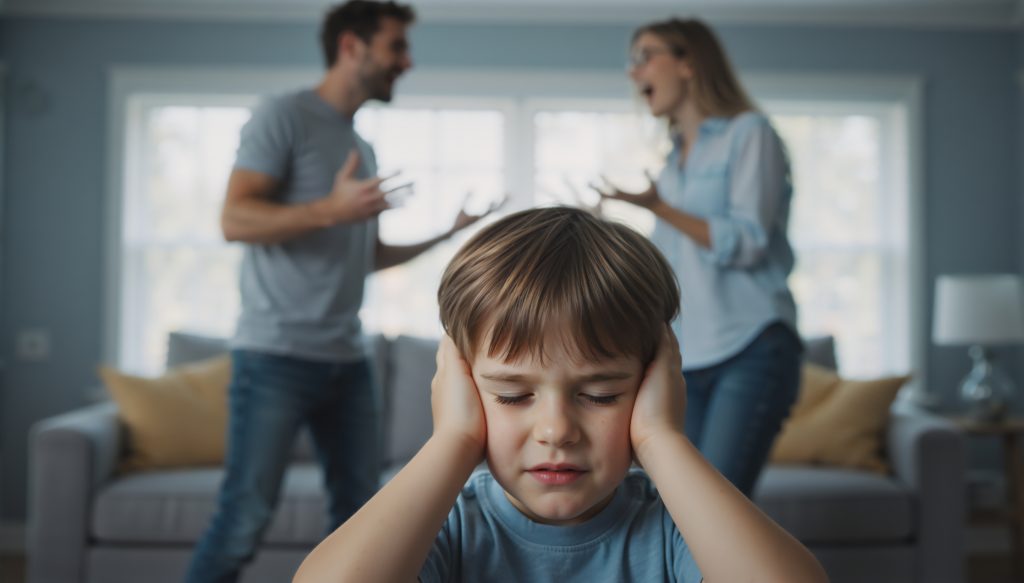
Sometimes yelling is not simply a communication habit. It may be a sign that a parent or family is carrying more stress than they can comfortably manage.
Parents may be dealing with exhaustion, relationship conflict, financial stress, caregiving responsibilities, work pressure, or unresolved experiences from their own childhood. Certain behaviors from children can also trigger particularly strong reactions because they connect with how the parent was raised.
If yelling has become frequent, conflicts continually escalate, or family members seem increasingly disconnected, professional support may help identify what is happening beneath the pattern.
Individual therapy can give parents space to understand their emotional triggers, stress responses, expectations, and experiences from childhood. Parenting support can provide practical strategies for discipline, communication, and emotional regulation.
Family therapy may also be helpful when conflict has significantly affected the parent-child relationship. A therapist can help family members communicate differently, understand one another’s experiences, and develop healthier ways to manage disagreements.
Seeking support does not require waiting until a family relationship feels completely broken. Sometimes getting help earlier makes it easier to interrupt patterns before resentment and emotional distance become more established.
A Gentle Closing Thought
Children do not need parents who never become angry or frustrated. They need adults who can demonstrate that difficult emotions can be experienced without allowing those emotions to control every interaction.
If yelling has become common in your home, change does not need to happen perfectly or immediately. It can begin by noticing your triggers sooner, pausing before reacting, communicating expectations more clearly, and returning to repair the relationship when a difficult moment does not go as planned.
Children learn from what happens during conflict, but they also learn from what happens afterward. They notice when adults apologize, take responsibility, calm themselves, maintain respectful boundaries, and try again.
The goal is not a home without disagreement. It is a home where disagreement does not have to mean fear or emotional disconnection. With greater awareness, consistent boundaries, healthier communication, and repair, parents can create relationships where children know that they can make mistakes, experience difficult emotions, and still feel safe enough to remain connected.